-
05-14 / 2026
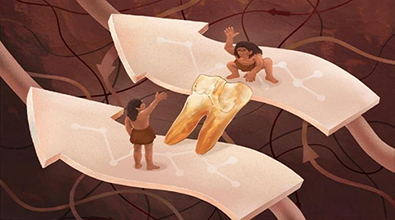
Research Highlight from Asia - Enamel Proteins Reveal New Clues about China's Ancient "Peking Man"
For the first time, scientists have successfully recovered ancient proteins from six Homo erectus teeth discovered in China, dating back approximately 400,000 years. This breakthrough, led by Qiaomei Fu at the Chinese Academy of Sciences...
-
04-04 / 2026
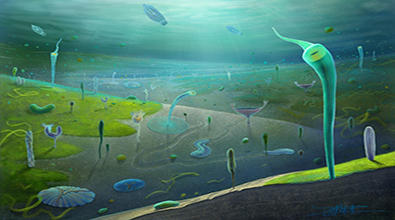
Research Highlight from Asia- Fossil Treasure Provides Key Evidence to Crack Darwin's Dilemma
Darwin was once puzzled: why do animal fossils suddenly appear in great abundance in Cambrian strata, while their ancestors are almost nowhere to be found in older rocks? For over a century, this mystery has troubled paleontologists.Now,...
-
01-29 / 2026
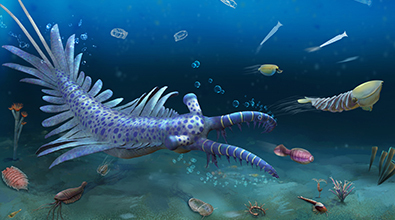
Research Highlight from Aisa - Newly Discovered Cambrian “Huayuan Biota” Reveals Life’s Miracle After Mass Extinction
In Huayuan County, Hunan Province, China, a chance event during the construction of a farm road has unlocked Earth’s life secrets buried for 512 million years. The “Huayuan Biota,” discovered by a team led by Academician Zhu Maoyan fr...
-
01-28 / 2026
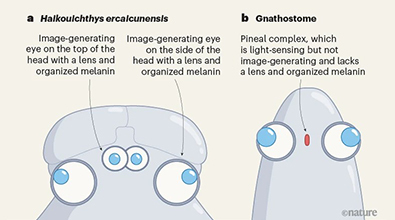
Research Highlight from Asia - Early Vertebrates Had Four Eyes
In a stunning twist to our understanding of evolutionary history, an international team of scientists has revealed that the earliest known vertebrates possessed not two, but four image-forming eyes. The research, centered on exquisitely ...
-
09-23 / 2025
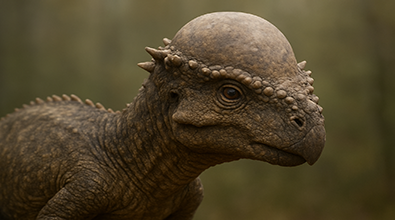
Research Highlight from Asia - Oldest Dome-Headed Dinosaur Discovered in Mongolia
A team of international paleontologists has announced the discovery of Zavacephale rinpoche, the oldest and most complete fossil of a dome-headed pachycephalosaur dinosaur, found in Mongolia’s Early Cretaceous Khuren Dukh Formation. The...
-
04-20 / 2025
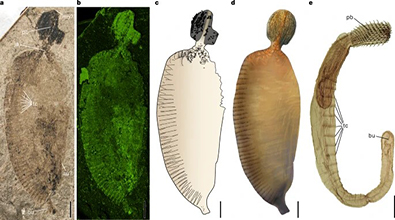
Research Highlight from Asia- New Jurassic Fossil Sheds Light on the Origins of Parasitic Thorny-Headed Worms
A remarkable 165-million-year-old fossil discovered in China has unveiled critical insights into the evolutionary history of acanthocephalans, a group of parasitic worms known as “thorny-headed worms.” Published in Nature, the study d...