Research Highlight from Asia - Enamel Proteins Reveal New Clues about China's Ancient "Peking Man"
For the first time, scientists have successfully recovered ancient proteins from six Homo erectus teeth discovered in China, dating back approximately 400,000 years. This breakthrough, led by Qiaomei Fu at the Chinese Academy of Sciences, opens a rare molecular window into one of humanity's most important but poorly understood ancestors.
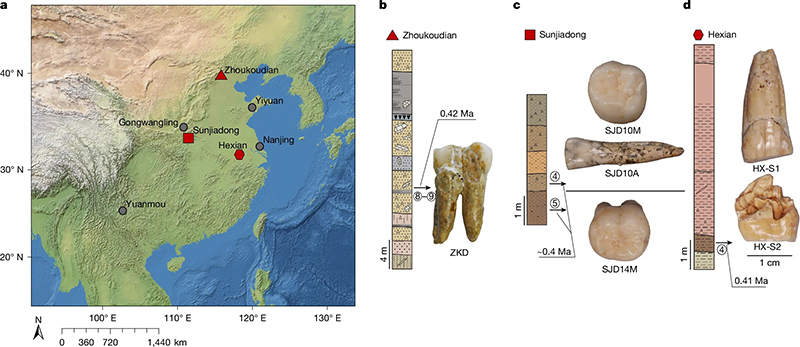
The teeth came from three famous fossil sites, Zhoukoudian (home of the original "Peking Man"), Hexian, and Sunjiadong. Remarkably, all six specimens share two unique protein variants never seen together in any other human lineage, including Neanderthals, Denisovans, and modern humans.
One variant, AMBN (A253G), appears to be entirely new to science and may be a signature specific to Middle Pleistocene Homo erectus from China. The other, AMBN (M273V), was previously known only in Denisovans. The researchers suggest that Denisovans likely acquired this variant through interbreeding with populations related to these Chinese Homo erectus.
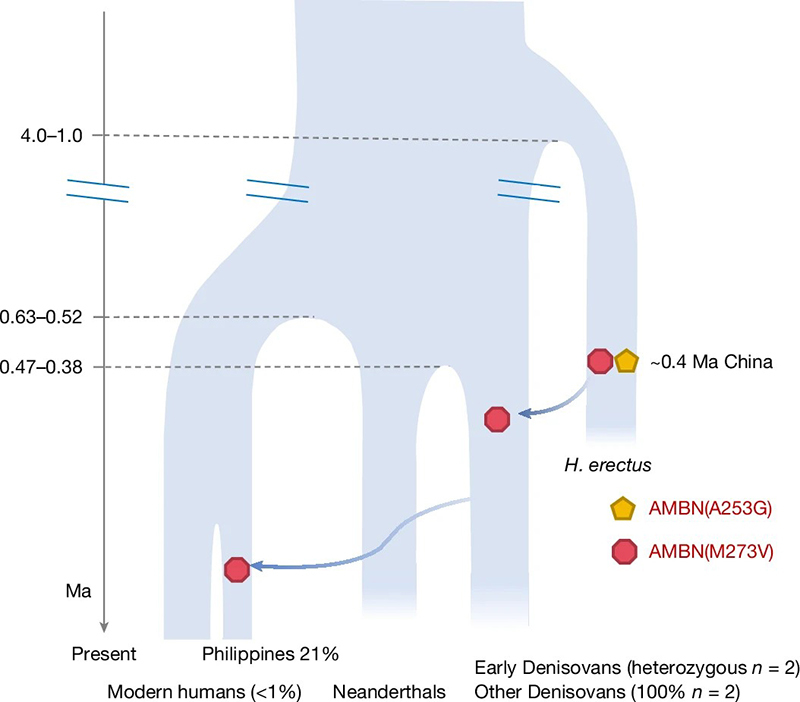
The study also identified the sex of the individuals: five males and one female. This research demonstrates that even when DNA cannot be retrieved, ancient proteins preserved in tooth enamel can provide powerful insights into human evolution, migration, and interbreeding across continents and species.
——
Reference:
Fu, Q., Wu, Z., Bennett, E.A. et al. Enamel proteins from six Homo erectus specimens across China. Nature (2026). https://doi.org/10.1038/s41586-026-10478-8
Attachment Download:
